
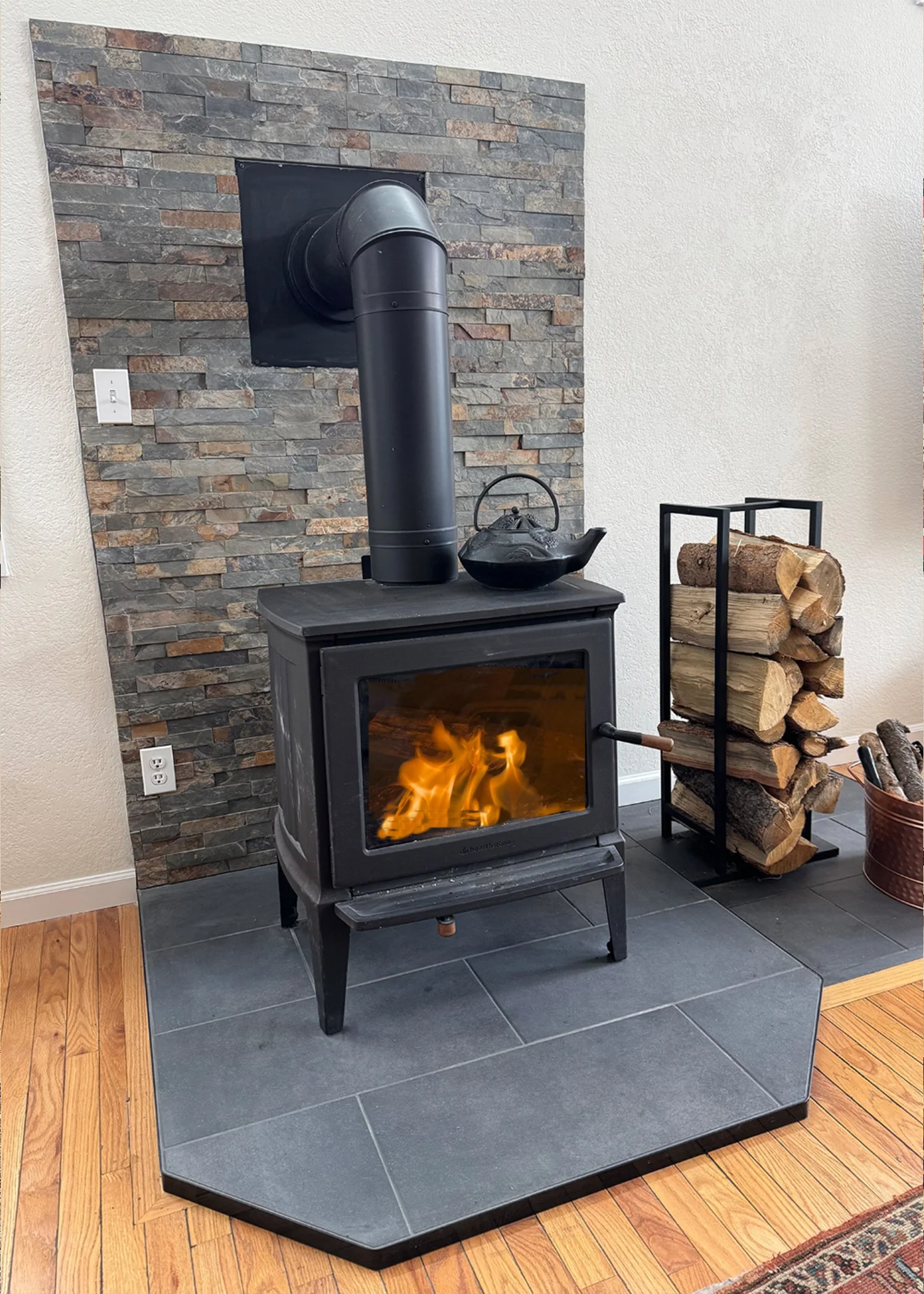
Many of our customers hustled to put in their orders for a new wood stove before the IRS Biomass Tax Credit was eliminated on December 31, 2026.
If you missed the boat, don’t worry. A wood stove will still pay for itself in just a couple of years!
Here’s how.
Cheap Firewood Throughout Colorado’s Front Range
The biggest incentive for foothills homeowners is an increased supply of cheap or even free firewood. The current severe drought (as of this writing, our snowpack is less than 60% of normal) means that trees all across the state are vulnerable to damage from various species of pine beetles, borers, and budworms.
A healthy Ponderosa pine, for example, has natural protection from pine beetle damage: it produces enough resin, or “pitch,” to keep beetles from boring through the bark. But dehydrated trees don’t produce enough pitch, which allows the beetles to enter. Long story short, this means that our forests are in distress and many trees are dying, which is devastating. It’s incredibly sad to see your own trees struggling. And just as sad to have to cut them down.
Fire Mitigation = Even More Available Firewood
The other part of this equation is the homeowner’s insurance companies, which are becoming increasingly adamant about fire mitigation around the properties they insure. Unfortunately, even healthy trees are often on the insurance companies’ hit lists. As homeowners are forced to cut down trees, many will use them for firewood. But just as many are looking for someone to take the wood away!
The combination of struggling/dying trees and fire mitigation requirements means that there’s an abundance of firewood. Even firewood companies are now charging significantly less for a cord of wood from what prices were just a few years ago. And, if you’re friends with one of the homeowners who have no use for firewood, you might just get lucky and get it for free.
Before using all of this free wood in your wood stove, be sure to thoroughly season it thoroughly. Wood moisture will vary depending on the health of the tree at the time of cutting and whether it’s been split or left as rounds, and where and how long it’s been stored. Avoid burning any wood that hasn’t been seasoned for at least a year. Burning unseasoned wood makes for super smoky fires and creates creosote build-up in your chimney.
Firewood companies only sell seasoned wood that is ready to burn but the same can’t necessarily be said for wood you haul off a neighbor’s property.
There’s a great resource on our website, in “Homeowner Resources” (from our Products>Wood Fireplaces, Products>Wood Inserts, and Products>Wood Stoves pages). A local company called Sylvan Cycle is a new marketplace for homeowners needing fire mitigation, companies that offer fire mitigation services, and homeowners wanting to get rid of or acquire firewood. Check it out!
Today’s firewood market is flooded with supply - and there’s no signs of this changing anytime soon. Whether the wood comes from beetle kill or fire mitigation efforts, wood is easy to come by and cheaper than it has been in many years.
There are even more reasons to consider a wood stove.
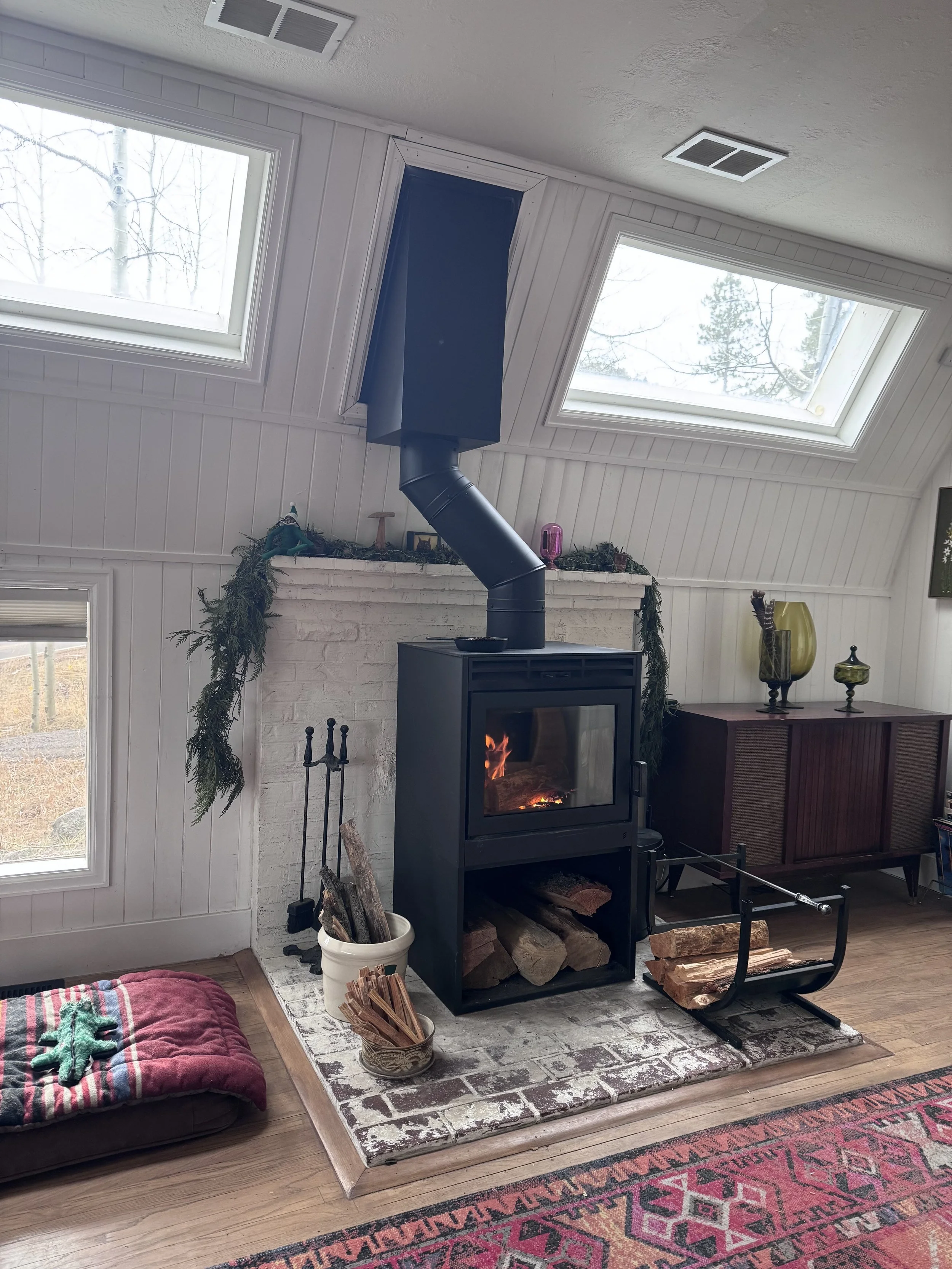
Clean Heat
NO heat source is perfect but contrary to popular belief, burning wood is not “dirty.” If you’re worried about contributing to pollution by burning wood, don’t be! EPA-rated stoves - the only kinds we sell - emit less than 2.5 grams of smoke per hour when burning cordwood. Some of the stoves we sell come in under 1 gram per hour! That’s a far cry from the 25+ grams of smoke per hour from stoves just 20 years old!
The secret is the catalytic combustor, or simply “catalyst”: a ceramic structure with a honeycomb configuration coated with noble metals. Once the catalyst is engaged, smoke must pass through the catalyst as it exits the firebox. When wood smoke passes through a cold catalyst, nothing happens. But when it passes through a hot catalyst that has reached at least 500 degrees F, a chemical reaction occurs that causes the smoke to ignite.
This secondary burn makes the stove more efficient because it produces nearly complete combustion, which means your stove burns everything in the stove: the wood plus the smoke generated from burning wood. This lets you get up to 50% more heat from each log. That’s a lot more heat from less firewood. Best of all, the by-products of a complete burn are clean. The by-products that are emitted through the chimney include water vapor and carbon dioxide, with very little smoke. An efficient burn also minimizes creosote build-up in the chimney. Less creosote means a safer home!
Your wallet will be happy when you buy less firewood or when you haul less free wood, because gas isn’t free.
Renewability AND Sustainability
Another reason to stick to wood is renewability. Natural gas and propane require fracking to extract the liquid. Fracking is environmentally detrimental and highly controversial. Wood, on the other hand, is an infinitely renewable resource when sourced sustainably.
Minimal Ongoing Costs
If you’re lucky enough to source wood for free and heat your home with wood, you won’t have any ongoing heating costs except your annual service, of course! Gas stoves and fireplaces have ongoing costs throughout their lifetime. You’ll always be paying for gas, and that’s a cost that will likely keep increasing.
100% Reliable Heat During Power Outages
You can always rely on a wood stove for heat (and sometimes, even cooking) during a power outage! Blowers won’t work during an outage, but the stove body and particularly the glass will radiate plenty of heat into the room even long after the fire has died out.

Zone Heating FOr Lower HEATING COSTS
“Heat where you live” is a great way to reduce your overall heating bill even if you don’t intend on heating your entire home with wood. Wood stoves can be placed where you need heat most: in the living room, kitchen, great room, or basement-level living or office space. You don’t even need a traditional chimney! Wood stoves can be vented through a wall or through the roof, depending on the unique situation of each home.
Unbeatable Ambiance
There’s nothing quite like a wood fire: the aroma, the crackle, the zen of poking the fire to make it burn just right… You just can’t get that with a gas fire!
Conclusion
You’ve seen the many excellent reasons that a wood stove is a great investment for supplemental or whole-house heat. Even though the tax incentive is gone!
Abundance of cheap or free firewood due to the drought and insurance requirements
Clean, sustainable heat source
Reliable heat during power outages
Unbeatable ambiance
A wood stove can pay for itself with lower heating costs and as a reliable source of heat during power outages. The tax credit may be gone, but the many reasons to install a wood stove are still here. Come check out the wood stoves we have on display in our showroom!